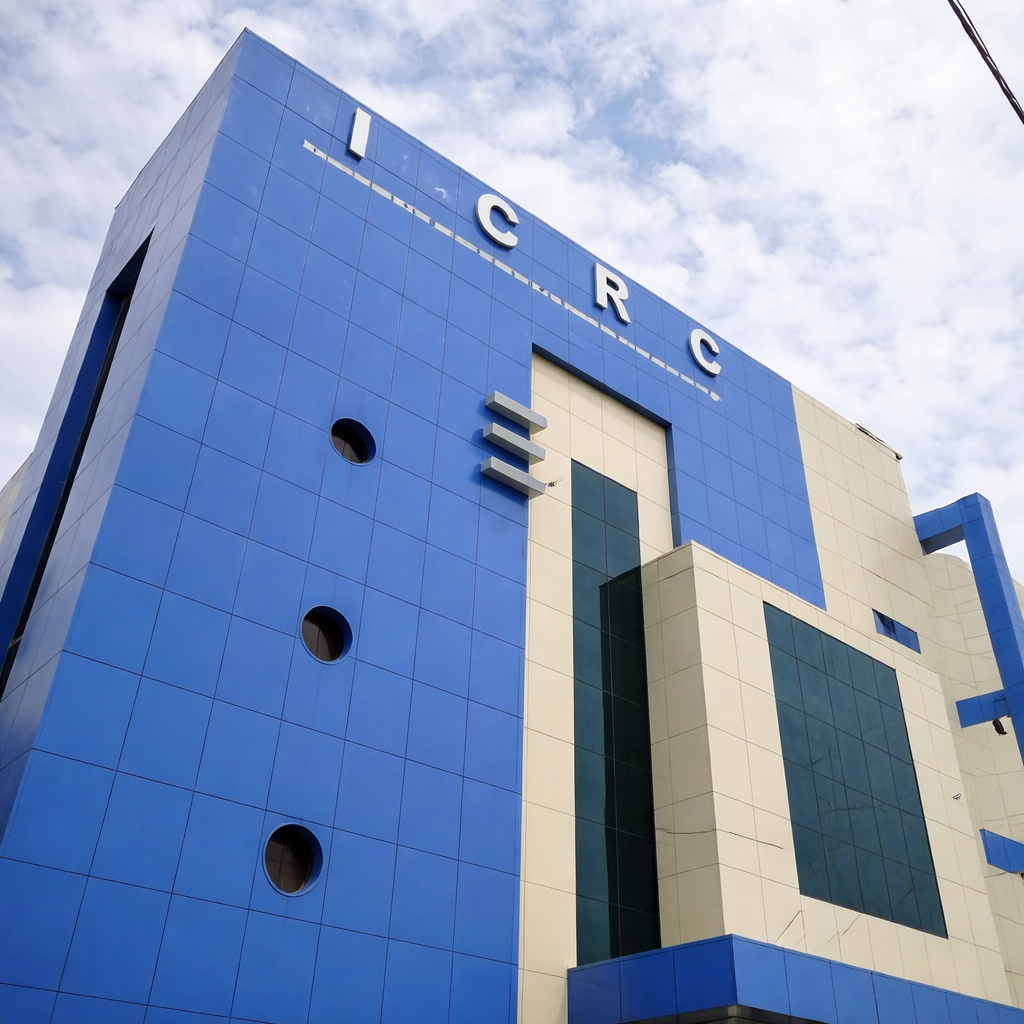
The structural evolution of infrastructure procurement in the Federal Republic of Nigeria reached a definitive milestone in August 2025 with the formal issuance of the Public-Private Partnership (PPP) Project Financial Model Guide by the Infrastructure Concession Regulatory Commission (ICRC).1 This regulatory intervention addresses a protracted period of methodological inconsistency that previously hindered the bankability of large-scale infrastructure projects across the federation.1 Before this codified reform, the 2018 PPP Manual provided a foundational workflow for project identification and procurement but lacked the granular technical prescriptions necessary to standardise the financial “engine” of a concession agreement.1 Consequently, project sponsors often presented disparate financial structures to the Federal Executive Council (FEC), leading to prolonged due diligence cycles and a perceptible dilution of investor confidence.1 The 2025 Guide, therefore, functions as both a regulatory mandate and a technical manual, establishing the minimum benchmarks for how financial models must be constructed, tested, and presented to ensure fiscal transparency and institutional accountability.1
Historical Trajectory and the Imperative for Financial Standardisation
The transition toward a more rigorous financial modelling framework is situated within Nigeria’s broader macroeconomic strategy to bridge a massive infrastructure deficit, estimated at approximately $100 billion annually.7 The Infrastructure Concession Regulatory Commission (Establishment, Etc.) Act 2005 provided the initial statutory basis for private sector participation in federal infrastructure.1 However, the early years of the commission were marked by a “learning-by-doing” approach that often struggled with the complexities of project finance in a volatile emerging market.10 The 2018 Manual was an attempt to provide a practical resource for Ministries, Departments, and Agencies (MDAs), yet it fell short of prescribing the rigorous mathematical and logical standards required by international lenders.1
By August 2025, the ICRC responded to these shortcomings by releasing a comprehensive suite of guidelines, including the Project Financial Model Guide, the Outline Business Case (OBC) Guide, and the Full Business Case (FBC) Guide.12 This reform coincides with a period of significant fiscal adjustment in Nigeria, characterized by the enactment of the Nigeria Tax Act 2025 and the removal of various subsidies, making the precision of financial projections more critical than ever before.13 The 2025 Guide effectively establishes the financial model as the “single source of truth” for the life of a project, governing everything from tariff adjustments to the eventual hand-back of assets to the state.1
| Regulatory Instrument | Year | Core Focus |
| ICRC (Establishment, Etc.) Act | 2005 | Statutory creation of the commission and basic concession framework.1 |
| National Policy on PPP (N4Ps) | 2009 | Policy objectives: Value for Money, transparency, and efficiency.15 |
| ICRC PPP Regulations | 2014 | Procedural rules for federal-level project implementation.9 |
| PPP Manual | 2018 | Practical guidance for MDAs on project lifecycles.1 |
| PPP Project Financial Model Guide | 2025 | Minimum benchmarks for financial preparation and testing.1 |
Institutional Governance and the Delegated Approval Thresholds
A pivotal development alongside the Financial Model Guide is the PPP Regulatory Notice of August 2025, which fundamentally reconfigures the approval hierarchy for infrastructure projects in Nigeria.16 Traditionally, the Federal Executive Council (FEC) was the sole approving authority for all federal PPP contracts.16 The 2025 Notice introduces a decentralized regime intended to accelerate project delivery while maintaining central regulatory oversight through the ICRC.16
The new thresholds delegate powers to ministerial and agency-level Project Approval Boards (PABs) based on the total project cost.17 For projects exceeding ₦20 billion, the FEC remains the ultimate authority.17 However, for projects of ₦20 billion and below, the PAB of the relevant Ministry or Parastatal assumes the responsibility for final approval, provided the project has secured an ICRC Certificate of Compliance.16 This institutional shift requires that financial models be robust enough to withstand scrutiny at multiple levels of government, as the ICRC remains mandated to lead negotiations and conduct due diligence on all prospective partners regardless of the project’s size.16
| Approving Authority | Project Cost Threshold | Requirement |
| Federal Executive Council (FEC) | Above ₦20,000,000,000.00 | Mandatory ICRC Certificate of Compliance.17 |
| PAB of the Ministry | ₦20,000,000,000.00 and below | Mandatory ICRC Certificate of Compliance.17 |
| PAB of the Supervisory Ministry | ₦10,000,000,000.00 – ₦20,000,000,000.00 | Mandatory ICRC Certificate of Compliance.17 |
| PAB of the Parastatal/Agency | ₦10,000,000,000.00 and below | Mandatory ICRC Certificate of Compliance.17 |
Core Components and Structural Requirements of the 2025 Model Guide
The 2025 Guide prescribes a standardized architecture for financial models to facilitate efficient review by the commission and institutional lenders.1 The model is expected to be a dynamic tool, rather than a static document, capable of reflecting changes in macroeconomic variables and project-specific risks.1
Project Scope and Stakeholder Delineation
At the outset, the model must include a detailed project overview that articulates the purpose, scope, and strategic objectives of the infrastructure asset.1 This section serves to ground the financial projections in the physical and operational realities of the project.6 It also mandates the clear identification of all principal stakeholders, including government entities (Grantors), private investors (Sponsors), contractors, and operators.1 The delineated roles and responsibilities of these parties must be explicitly reflected in the cash flow logic of the model, particularly concerning the distribution of risks and the timing of capital injections.1
The model must further specify the contractual structure—whether it be Design-Build-Finance-Operate-Transfer (DBFOT), Build-Operate-Transfer (BOT), or Rehabilitate-Operate-Transfer (ROT).1 This classification is not merely administrative; it dictates the fundamental revenue and cost drivers of the model.19 For instance, a ROT project requires a heavy emphasis on initial rehabilitation costs and environmental audits, whereas a DBFOT project focuses on the long-term amortisation of greenfield construction debt.6
Timeframe and Periodicities
Defining the project timeframe is a mandatory requirement, covering both the construction phase and the full operational (concession) period.1 The Guide emphasizes that the model must test whether long-term financial and service delivery obligations can be met throughout the asset’s lifecycle.1 In professional practice, this typically involves constructing the model with a “lowest common denominator” periodicity—usually monthly or quarterly—to allow for precise tracking of construction drawdowns and debt service coverage.18
| Project Phase | Focus of the Model | Time Unit (Standard) |
| Construction | Capital expenditure timing, debt drawdowns, interest during construction.18 | Monthly.18 |
| Operational | Revenue receipts, OpEx, debt service, equity distributions.1 | Quarterly or Semi-annual.18 |
| Hand-back | Terminal value, asset condition audit, final debt clearance.1 | Annual.22 |
Revenue Assumptions and Projections Methodology
The 2025 Guide recognizes revenue as the primary driver of project bankability and mandates a highly granular approach to income projections.1 Every financial model must explicitly state all sources of revenue, classifying them into three distinct frameworks: user-pays, government-pays, and hybrid models.1
Revenue Categorisation and Ancillary Streams
User-pays models are characterized by revenues derived directly from end-users, such as tolls, fees, or tariffs.1 Conversely, government-pays models rely on availability payments, annuities, or performance-based incentives provided by the state.6 Hybrid models combine these elements, often to mitigate the traffic or demand risk inherent in new greenfield infrastructure.6
The Guide further requires project sponsors to identify and disclose ancillary revenue streams.1 These include secondary income from commercial developments (e.g., service areas on highways), advertising, or other third-party activities.1 Including these streams provides a more accurate picture of the project’s financial resilience and may influence the revenue-sharing arrangements negotiated with the government.1
Growth Assumptions and Macroeconomic Variables
Projections must not be presented in isolation; they must incorporate robust assumptions for future growth rates, inflation, and pricing adjustments.6 The Guide mandates that these assumptions be grounded in credible data, such as GDP growth forecasts and Consumer Price Index (CPI) projections.1 For 2026, professional benchmarks in Nigeria suggest a real GDP expansion of approximately 4.3% to 4.6% and a moderating inflation rate toward 14% to 15%.23 These variables directly impact the “indexation” formulas used in the model to adjust tariffs or availability payments over time, ensuring the project maintains its real value against currency devaluation and cost increases.6
| Variable | 2026 Projection (Benchmark) | Impact on PPP Model |
| Real GDP Growth | 4.3% – 4.6% | Driver for demand/volume growth in user-pays projects.23 |
| Inflation Rate | 14.0% – 15.0% | Indexation of OpEx and periodic tariff adjustments.23 |
| Exchange Rate | ~₦1,300/USD | Critical for projects with foreign-denominated debt or inputs.23 |
| Risk-Free Rate | 14.8% – 16.0% | Base for WACC and discount rate calculations (10Y Bond).27 |
Cost Assumptions and Expenditure Architecture
A robust financial model must present comprehensive estimates for both capital and operational costs, ensuring that all contractual obligations are enforceable and financially sustainable.1
Capital Expenditure (CapEx) and Contingency Planning
The CapEx module should detail all initial and total capital costs, including design, engineering, land acquisition, insurance premiums during construction, and permit fees.6 The Guide emphasizes the distinction between fixed and variable costs and requires the inclusion of “Contingency Provisions” to account for unforeseen events or cost overruns.1 In the Nigerian context, where construction projects are frequently subject to supply chain disruptions and currency volatility, these buffers are essential for enhancing the project’s financial resilience.1
Operating Expenditure (OpEx) and Maintenance
OpEx projections must cover the full spectrum of recurring costs, including routine maintenance, major overhauls (lifecycle costs), staff salaries, and utilities.1 The model must account for the “maintenance culture” required by the concession agreement, ensuring that the private partner remains responsible for the asset’s performance throughout the term.4 All operational costs should be adjusted for inflation to reflect the long-term reality of service delivery in Nigeria.1
Financing Structure and Capital Stack Analysis
The financing section of the model explains how the project will be funded and the subsequent implications for risk allocation and bankability.1 The Guide mandates that projects clearly define the proportion of private equity and debt financing.1
Debt and Equity Dynamics
For projects utilizing debt financing, the model must specify interest rates, loan tenures, and repayment schedules through a detailed debt amortisation schedule.1 It must also distinguish between project financing (non-recourse or limited recourse to the Special Purpose Vehicle) and corporate financing (based on the sponsors’ balance sheet).6 In Nigeria, infrastructure investments typically feature high debt-to-equity ratios, often around 80:20, although riskier sectors or sub-Saharan Africa projects may require a higher share of equity to attract lenders.29
| Component | Professional Standard | Regulatory Detail |
| Equity | 20% – 30% | Cost must be derived using the Capital Asset Pricing Model (CAPM).6 |
| Debt | 70% – 80% | Detailed principal and interest schedule required.6 |
| Tenure | 9+ Years (Avg) | Must align with the project’s operational cash flow profile.7 |
| VGF/Grants | Project-specific | Subsidies for projects that are economically but not financially viable.1 |
Viability Gap Funding (VGF) and Public Support
In a forward-thinking provision, the Guide emphasizes the incorporation of grants, guarantees, or Viability Gap Funding (VGF) to improve project bankability.1 VGF refers to financial support provided to projects that are economically viable (generating positive social impact) but financially unviable (insufficient returns for private investors).30 Projects requiring more than 50% VGF of total capital costs are generally ineligible for this specific support window at the subnational level, a benchmark often mirrored in federal assessments to prevent excessive fiscal exposure.30
Taxation and Accounting in the 2025 Fiscal Environment
The 2025 Guide requires that every PPP financial model clearly set out the tax framework and accounting methodology applied to the project.1 This must be done in accordance with the Nigeria Tax Act (NTA) 2025, which introduced sweeping reforms to the country’s tax system, effective January 1, 2026.13
The Unified Development Levy
One of the most significant changes for PPP modelers is the introduction of a 4% Development Levy on assessable profits.31 This levy consolidates and replaces several previous “nuisance” charges, including the Tertiary Education Tax (TET), NASENI levy, NITDA levy, and Police Trust Fund levy.32
| Former Levy | Old Rate | Current Status (NTA 2025) |
| Tertiary Education Tax | 3.00% | Replaced by 4% Development Levy.32 |
| NITDA Levy | 1.00% | Replaced by 4% Development Levy.32 |
| NASENI Levy | 0.25% | Replaced by 4% Development Levy.32 |
| Police Trust Fund | 0.005% | Replaced by 4% Development Levy.32 |
For financial models, the transition to the 4% Development Levy simplifies compliance but necessitates a recalculation of historical projections for projects already in the pipeline.32 Small companies with a turnover below ₦50 million and fixed assets below ₦250 million are exempt from this levy, but most federal-level PPPs will far exceed these thresholds.32
Minimum Effective Tax Rate and Global Standards
To align with global tax principles such as the OECD Pillar Two framework, the NTA 2025 introduces a 15% Minimum Effective Tax Rate (ETR) for large companies and multinational enterprises (MNEs) with an aggregate turnover of ₦20 billion or more.13 If a project’s effective tax rate falls below 15% due to various incentives, a “top-up tax” must be calculated in the model to meet this floor.13 This provision ensures that profits in low-tax jurisdictions are adequately taxed and prevents the erosion of the Nigerian tax base.13
Capital Allowances and Depreciation
The Guide mandates that asset depreciation be aligned with the expected useful life of the assets using standard accounting methods.1 The NTA 2025 simplified this by repealing the system of initial and annual allowances in favor of uniform capital allowance rates of 10%, 20%, or 25% depending on the asset category.34
| Asset Class | Uniform Rate (NTA 2025) | Examples |
| Class 1 | 10% | Buildings, agricultural expenditure, masts.39 |
| Class 2 | 20% | Plant expenditure, mining expenditure, heavy equipment.39 |
| Class 3 | 25% | Computer hardware, software, specific technology.34 |
Financial Metrics and Key Performance Indicators (KPIs)
To evaluate the feasibility and bankability of a project, the ICRC requires the calculation of specific financial metrics.6 These metrics serve as the objective basis for investment planning and regulatory approval.1
Solvency and Debt Coverage
The Debt Service Coverage Ratio (DSCR) is perhaps the most critical metric for lenders.6 It measures the project’s ability to cover its debt obligations using net operating income.6
While a DSCR greater than 1 is “advisable,” higher values indicate a stronger repayment capacity and provide a significant advantage in securing financing in a high-risk environment.6
Investment Return and Attractiveness
The model must calculate the Internal Rate of Return (IRR) for both equity investors and debt financiers.6 The IRR represents the discount rate that makes the Net Present Value (NPV) of all cash flows equal to zero.6 When the IRR is higher than the Weighted Average Cost of Capital (WACC), the project is deemed attractive to investors.1
The WACC itself is used as the discount factor for NPV calculations.6 It is calculated as follows:
Where:
- is the cost of equity, which the Guide mandates must be scientifically derived using the Capital Asset Pricing Model (CAPM).6
- is the cost of debt.
- is the corporate tax rate.
- and represent the proportions of equity and debt in the capital structure ().
Other Mandatory Metrics
The Guide also requires the following indicators to provide a comprehensive view of project viability 6:
- Net Present Value (NPV): The discounted value of all future cash flows minus the initial investment.6
- Profitability Index (PI): The ratio of the present value of future cash inflows to the initial investment outlay.6
- Return on Equity (ROE): Measures the profitability of the project from the perspective of equity shareholders.1
- Payback Period: Estimates how quickly the initial invested capital is recovered, both on a discounted and undiscounted basis.6
Value for Money (VfM) and the Public Sector Comparator (PSC)
Achieving “Value for Money” (VfM) is the ultimate justification for using a PPP model over traditional public procurement.1 The Guide mandates a rigorous VfM assessment using the Public Sector Comparator (PSC) methodology.6
The Quantitative PSC Benchmark
The PSC is a hypothetical model representing the total cost to the government of delivering the project through conventional procurement.6 It involves:
- Estimating Life-cycle Costs: Capital and operational expenditures over the project duration.44
- Quantifying Risks: Assigning a monetary value to the risks that the public sector would retain under traditional delivery (e.g., construction overruns, demand shortfalls).6
- Discounting to Present Value: Using an appropriate discount rate, often the government’s cost of borrowing, to determine the NPV of the PSC.44
VfM is achieved if the discounted sum of expected payments under the PPP model is lower than the NPV of the PSC.44
Qualitative Factors and Strategic Value
Because quantitative models cannot capture all nuances, the Guide also requires a qualitative analysis.6 This evaluates non-financial benefits such as accelerated project delivery, enhanced service quality, and the introduction of innovation.6 The final decision to proceed as a PPP must consider both the numeric test and these qualitative drivers.6
Risk and Sensitivity Analysis Framework
Infrastructure projects are inherently risky due to their long-term nature and large capital requirements.1 The 2025 Guide requires every financial model to include a comprehensive risk and sensitivity analysis.1
Risk Identification and Allocation
Key project risks—including construction delays, revenue shortfalls, operational challenges, regulatory changes, and interest rate fluctuations—must be identified and quantified.1 A core tenet of the PPP framework is that risks should be allocated to the party best able to manage them.41 The financial model must reflect this allocation, showing which party bears the financial consequences of specific risk events.6
Robust Sensitivity Testing
The Guide mandates robust sensitivity testing where the impact of variations in critical assumptions is evaluated.1 This typically involves testing the model under baseline, optimistic, and pessimistic scenarios.1
| Sensitivity Parameter | Variation (Standard) | Output to Monitor |
| Construction Cost | +10% to +20% | Project IRR and DSCR.6 |
| Revenue Growth | -10% to -20% | Debt service capability.1 |
| Interest Rates | +2% to +5% | WACC and overall NPV.6 |
| Inflation | +5% | Operational cost resilience.1 |
These tests empower project sponsors and the ICRC to proactively de-risk the project and inform contractual remedies for revenue shortfalls or cost overruns.1
Regulatory Fees and Revenue Sharing Requirements
PPP projects are subject to specific fees and revenue-sharing mechanisms that must be incorporated into the financial model.1
ICRC Regulatory Fees
The ICRC charges two primary types of regulatory fees 1:
- One-off Entry Fee: Up to 5% of the project’s entry fee or transaction value.1
- Annual Regulatory Fee: A mandatory charge of 1% of the project’s gross revenues.1
There is a noted ambiguity in the Guide regarding whether the 1% annual fee is part of the government’s revenue share or an additional obligation.1 Legal analysts suggest that clear structuring in the project agreement is necessary to prevent an excessive cumulative financial burden on the project company.1
Government Revenue Sharing
For user-pay and hybrid PPP arrangements, the government is entitled to a share of the generated revenue.1 This share is not fixed by policy but should be tailored based on the project’s risk profile and its capacity to bear such obligations without undermining financial viability.1 In government-pay models, where the state provides the funding (e.g., availability payments), the government is generally not entitled to a revenue share.1
Practical Spreadsheet Architecture and Model Best Practices
To ensure transparency and logical consistency, the Guide and supplementary materials recommend a standardized structure for the Excel-based financial model.21
Standard Sheet Sequence
A professionally structured PPP model for the Nigerian market should follow this sequence 22:
- Model Cover: Project name, promoter, date, and version control.22
- Summary/Dashboard: High-level KPIs (NPV, IRR, DSCR), ratios, and charts for decision-makers.22
- Model Assumptions: Central repository for all static and dynamic inputs.21
- Time & Flags: Master timeline with flags for construction, operation, and debt repayment periods.21
- Revenue & Cost Drivers: Detailed calculations for projected volumes, tariffs, and OpEx line items.6
- Capex & Depreciation: Breakdown of construction costs and the amortisation of non-current assets.22
- Financing & Debt Schedule: Drawdown and repayment logic for all debt tranches.22
- Tax Calculations: Application of CIT, Development Levy, and incentives based on NTA 2025.22
- Financial Statements: Integrated P&L, Balance Sheet, and Cash Flow Statement.6
- Scenario & Sensitivity Analysis: Levers to flex key assumptions and view the impact on KPIs.22
- VfM & PSC: Comparison of the PPP outcome against the public sector alternative.22
Modeling Techniques and “Circularity”
Standard practice across “Wall Street” and global project finance—now encouraged by the ICRC—is the use of specific color-coding 52:
- Blue Text: Manual inputs (hardcoded numbers).52
- Black Text: Formulas and internal calculations.52
- Green Text: Links to other worksheets.52
A common technical challenge in these models is “circularity,” particularly where interest expense (on the income statement) reduces net income, which reduces cash available to repay debt, which in turn changes the debt balance and the subsequent interest expense.52 Modelers must ensure that Excel’s “Iterative Calculations” feature is enabled or use a “copy-paste” macro to handle these loops without crashing the model.52
Reporting, Documentation, and Final Output
The final segment of the Guide focuses on how the model’s results should be presented to stakeholders.1 Each financial model must include an executive summary that concisely highlights the project’s financial viability, key risks, and projected returns.1 This ensures that regulators, investors, and lenders can make informed decisions based on a clear, high-level understanding of the data.1
The Role of Independent Audit
Before submission to the ICRC, project sponsors are called upon to conduct an independent audit and review of the financial model.1 This audit verifies the model’s accuracy, logical consistency, and completeness, serving as a final quality control measure to build trust between the public and private parties.1 Without this rigorous review, the government risks exposure to unbudgeted liabilities and suboptimal risk transfer, which undermines the very rationale for the PPP model.1
Future Outlook for Infrastructure Finance in Nigeria
The issuance of the 2025 Guide represents a significant step toward aligning Nigerian practice with international standards, such as those promoted by the World Bank and APMG.1 By reducing subjectivity and inconsistency in the approval process, the Guide enhances investor confidence and supports the bankability of projects in the energy, transport, and social sectors.1
However, the increased level of detail and documentation required by the new framework may raise transaction costs and lengthen project preparation timelines.1 It is therefore essential for the ICRC and government agencies to maintain a degree of flexibility, allowing for project-specific tailoring and periodic reviews of the requirements based on market feedback.1 In the long term, the adoption of these standards at the subnational level would help harmonize PPP frameworks across Nigeria, promoting best practices and unlocking greater private capital for the nation’s development.1
In conclusion, the PPP Project Financial Model Guide 2025 is a critical tool for strengthening the infrastructure ecosystem in Nigeria.1 It provides a transparent, objective, and bankable framework that safeguards the public interest while attracting the private investment necessary to close the country’s significant infrastructure gap.1 Success will ultimately depend on the quality of implementation and the continued alignment of financial projections with the evolving fiscal and macroeconomic realities of the federation.1
Works cited
- PPP_Financial_Model_Guide_Olaniwun-Ajayi-September-2025.pdf
- The Infrastructure Concession Regulatory Commission Financial Model Guide, accessed March 30, 2026, https://www.olaniwunajayi.net/blog/the-infrastructure-concession-regulatory-commission-financial-model-guide/
- PPP Technical Note – Documents & Reports, accessed March 30, 2026, https://documents1.worldbank.org/curated/en/570711617186597799/pdf/PPP-Technical-Note.pdf
- (PDF) Public-Private-Partnership (Ppp) in Nigeria – ResearchGate, accessed March 30, 2026, https://www.researchgate.net/publication/338562002_Public-Private-Partnership_Ppp_in_Nigeria
- THE PUBLIC PRIVATE PARTNERSHIP FINANCIAL MODEL GUIDE 2025; KEY TAKEAWAYS | by Pavestones Legal | Medium, accessed March 30, 2026, https://medium.com/@pavestoneslegal/the-public-private-partnership-financial-model-guide-2025-key-takeaways-df2c07399cd7
- PUBLIC-PRIVATE PARTNERSHIP (PPP) PROJECT FINANCIAL MODEL GUIDE, accessed March 30, 2026, https://www.icrc.gov.ng/wp-content/uploads/2025/08/PUBLIC-PRIVATE-PARTNERSHIP-PPP-PROJECT-FINANCIAL-MODEL-GUIDE.pdf
- Nigeria Infrastructure Debt Fund Impact Report 2025-2026 – The Nigerian Stock Exchange, NSE, accessed March 30, 2026, https://doclib.ngxgroup.com/Listings-site/corporate-disclosure-site/Documents/NIDF_2025_Impact_Report_.pdf
- Unlocking Nigeria’s Economic Potential: The Power of Infrastructure Development, accessed March 30, 2026, https://finance.gov.ng/unlocking-nigerias-economic-potential-the-power-of-infrastructure-development/
- Privately Initiated Infrastructure Proposals – TEMPLARS Law, accessed March 30, 2026, https://www.templars-law.com/app/uploads/2025/11/Privately-Initiated-Infrastructure-Proposals-and-Projects-.pdf
- PPP Reference Guide – PPP Framework – PPP Resource Center, accessed March 30, 2026, https://ppp.worldbank.org/sites/default/files/2021-08/PPP%20Reference%20Guide%20Version%203%20-%20PPP%20Framework.pdf
- Reference Guide – PPP Resource Center, accessed March 30, 2026, https://ppp.worldbank.org/sites/default/files/2024-08/PPP%20Reference%20Guide%20Version%203.pdf
- ICRC Guidelines 2025 – Infrastructure Concession Regulatory Commission, accessed March 30, 2026, https://www.icrc.gov.ng/icrc-guidelines-2025/
- Nigeria Tax Act, 2025 has been signed – highlights | EY – Global, accessed March 30, 2026, https://www.ey.com/en_gl/technical/tax-alerts/nigeria-tax-act-2025-has-been-signed-highlights
- Landscape of Climate Finance in Nigeria 2025, accessed March 30, 2026, https://www.climatepolicyinitiative.org/wp-content/uploads/2025/05/Landscape-of-Climate-Finance-in-Nigeria-2025.pdf
- infrastructure provision through public-private partnerships: nigeria experience – Lancashire Online Knowledge, accessed March 30, 2026, https://knowledge.lancashire.ac.uk/id/eprint/18011/1/Chapter%208%20Nigeria%20final%20Corrections%20%282016.11.30%29.pdf
- INTRODUCTION HIGHLIGHTS OF THE NOTICE Approved Thresholds – Olaniwun Ajayi LP, accessed March 30, 2026, https://www.olaniwunajayi.net/wp-content/uploads/2025/10/A-LEGAL-ANALYSIS-OF-ICRC-PPP-REGULATORY-NOTICE-FOR-MDAS-2025.pdf
- PPP REGULATORY NOTICE – AUGUST 2025, accessed March 30, 2026, https://www.icrc.gov.ng/wp-content/uploads/2025/08/PPP-REGULATORY-NOTICE-%E2%80%93-AUGUST-2025.pdf
- Operational phase of the asset life cycle: Building financial models – CohnReznick, accessed March 30, 2026, https://www.cohnreznick.com/insights/operational-phase-asset-life-cycle-building-financial-models
- THE PUBLIC PRIVATE PARTNERSHIP FINANCIAL MODEL GUIDE 2025; KEY TAKEAWAYS – Pavestones Legal, accessed March 30, 2026, https://pavestoneslegal.com/the-public-private-partnership-financial-model-guide-2025-key-takeaways/
- OUTLINE BUSINESS CASE GUIDE – Infrastructure Concession Regulatory Commission (ICRC), accessed March 30, 2026, https://www.icrc.gov.ng/wp-content/uploads/2025/08/OUTLINE-BUSINESS-CASE-GUIDE.pdf
- Intro to Financial Modelling – Part 2: Layout & Structure – ICAEW.com, accessed March 30, 2026, https://www.icaew.com/technical/technology/excel-community/excel-community-articles/2020/intro-to-financial-modelling-part-2
- icrc-financial model template, accessed March 30, 2026, https://www.icrc.gov.ng/wp-content/uploads/2021/02/Financial-Model-Template.pdf
- Nigeria’s GDP Forecast: What Does Real Growth Look Like in 2026? – Veriv Africa, accessed March 30, 2026, https://www.verivafrica.com/insights/nigerias-gdp-forecast-what-does-real-growth-look-like-in-2026
- Nigeria Economic Outlook 2026 – PwC Strategy, accessed March 30, 2026, https://www.strategyand.pwc.com/a1/en/insights/nigeria-economic-outlook.html
- Nigeria – IMF DataMapper, accessed March 30, 2026, https://www.imf.org/external/datamapper/profile/NGA
- Project Finance Nigeria Case Studies | PDF – Scribd, accessed March 30, 2026, https://www.scribd.com/presentation/761826468/Project-Finance-Nigeria-Case-Studies
- Nigeria 10-Year Government Bond Yield – Quote – Chart – Historical Data – News, accessed March 30, 2026, https://tradingeconomics.com/nigeria/government-bond-yield
- Nigeria 10-Year Bond Yield Historical Data – Investing.com, accessed March 30, 2026, https://www.investing.com/rates-bonds/nigeria-10-year-historical-data
- Financial performance of infrastructure investment – Documents & Reports – World Bank, accessed March 30, 2026, https://documents1.worldbank.org/curated/en/099042225153514679/pdf/P506950-d2ed4100-85a3-457d-9d5a-2a34cd515a7f.pdf
- PROJECT FACILITATION FUND EXECUTIVE ORDER – Zamfara State Government, accessed March 30, 2026, https://zamfara.gov.ng/wp-content/uploads/2025/12/Zamfara-PFF-Executive-Order.pdf
- THE IMPLEMENTATION OF THE NIGERIA TAX ACT 2025 – PRACTICAL GUIDANCE FOR BUSINESSES – Pavestones Legal, accessed March 30, 2026, https://pavestoneslegal.com/the-implementation-of-the-nigeria-tax-act-2025-practical-guidance-for-businesses/
- Nigeria’s 2026 Tax Reform: New Rates, Penalties & Compliance Guide for Employers and Individuals, accessed March 30, 2026, https://remotesolutionsafrica.com/nigeria-2026-tax-reform/
- All New Tax Rates in Nigeria 2026 – PIT, CIT, VAT, WHT, Development Levy Explained, accessed March 30, 2026, https://nrsportal.ng/nigeria-tax-rates-2026-guide/
- Nigeria Tax Act (NTA) 2025 – Key Highlights for Manufacturing Businesses – TNP, accessed March 30, 2026, https://tnp.com.ng/nigeria-tax-act-nta-2025-key-highlights-for-manufacturing-businesses/
- From factories to boardrooms: Nigeria’s 4% development levy sparks unease across key industries | TheCable, accessed March 30, 2026, https://www.thecable.ng/from-factories-to-boardrooms-nigerias-4-development-levy-sparks-unease-across-key-industries/
- New Nigeria Tax Laws 2026: Key Highlights & Changes – Punch Newspapers, accessed March 30, 2026, https://punchng.com/highlights-of-new-tax-laws-starting-january-1-2026/
- Nigeria Tax Act, 2025 has been signed – highlights, accessed March 30, 2026, https://taxnews.ey.com/news/2025-1388-nigeria-tax-act-2025-has-been-signed-highlights
- Nigeria – Changes to Personal Income Tax – September 2025 – Mercans, accessed March 30, 2026, https://mercans.com/resources/statutory-alerts/nigeria-changes-to-personal-income-tax-september-2025/
- Series on Tax Reform Acts 2025 Part 2, accessed March 30, 2026, https://uubo.org/wp-content/uploads/2025/09/Series-on-Tax-Reform-Acts-2025-Part-2-finalised-x.pdf
- SOLAR Project-Finance-Nigeria-Case-Studies.pptx – Slideshare, accessed March 30, 2026, https://www.slideshare.net/slideshow/solar-projectfinancenigeriacasestudiespptx/255844390
- State Public-Private Partnership Framework Template – NGF Digital Repository, accessed March 30, 2026, https://ngfrepository.org.ng:8443/jspui/bitstream/123456789/7095/1/EMRC%20-%20PPP%20Framework%20v2-0%202025-08-08.pdf
- Value for Money (VFM) – Public-Private Partnership Resource Center, accessed March 30, 2026, https://ppp.worldbank.org/keyword/value-money-vfm
- Value for Money and the PSC – PPIAF, accessed March 30, 2026, https://www.ppiaf.org/sites/ppiaf.org/files/documents/toolkits/highwaystoolkit/6/pdf-version/5-22.pdf
- Value for Money (VfM) in PPPs – PPP Alliance, accessed March 30, 2026, https://www.pppalliance.org/blog/value-for-money-vfm-in-ppps
- (PDF) A Public Sector Comparator (PSC) for Value for Money (VFM) Assessment Tools, accessed March 30, 2026, https://www.researchgate.net/publication/274631939_A_Public_Sector_Comparator_PSC_for_Value_for_Money_VFM_Assessment_Tools
- Assessing Value for Money of the PPP Public Private Partnership, accessed March 30, 2026, https://ppp.worldbank.org/assessing-value-money-ppp
- State Public-Private Partnership Framework Template – NGF Digital Repository, accessed March 30, 2026, https://ngfrepository.org.ng:8443/bitstream/123456789/7095/1/EMRC%20-%20PPP%20Framework%20v2-0%202025-08-08.pdf
- Energy PF Modellers – What tabs do you have in your Excel sheet? : r/financialmodelling, accessed March 30, 2026, https://www.reddit.com/r/financialmodelling/comments/1o22xdy/energy_pf_modellers_what_tabs_do_you_have_in_your/
- Top Financial Planning Excel Templates for CFOs in 2025 – The CFO Show, accessed March 30, 2026, https://thecfoshowpodcast.com/blog/best-financial-excel-templates
- 11 Financial Modeling Examples & Templates for 2025 – insightsoftware, accessed March 30, 2026, https://insightsoftware.com/blog/11-financial-model-examples-and-templates/
- Top Financial Model Templates for Free Download: Ready-to-Use Excel Spreadsheets for Business Planning – Daloopa, accessed March 30, 2026, https://daloopa.com/blog/analyst-best-practices/top-financial-model-templates-for-free-download
- Financial Modeling Techniques | Excel Tutorial Lesson – Wall Street Prep, accessed March 30, 2026, https://www.wallstreetprep.com/knowledge/financial-modeling-techniques/
- PPP Certification | Public Private Partnership, accessed March 30, 2026, https://ppp.worldbank.org/ppp-certification
- About the PPP Certification Program Guide | The APMG Public-Private Partnerships Certification Program, accessed March 30, 2026, https://ppp-certification.com/ppp-certification-guide/about-ppp-guide
- Nigeria’s 2026 Budget: 50 Capital Projects to share N4.23trn in proposed spending, accessed March 30, 2026, https://nairametrics.com/2026/02/08/nigerias-2026-budget-50-capital-projects-to-share-n4-23trn-in-proposed-spending/